
Culture and Connections: History, Memory and Meaning at Anne Frank Exhibition
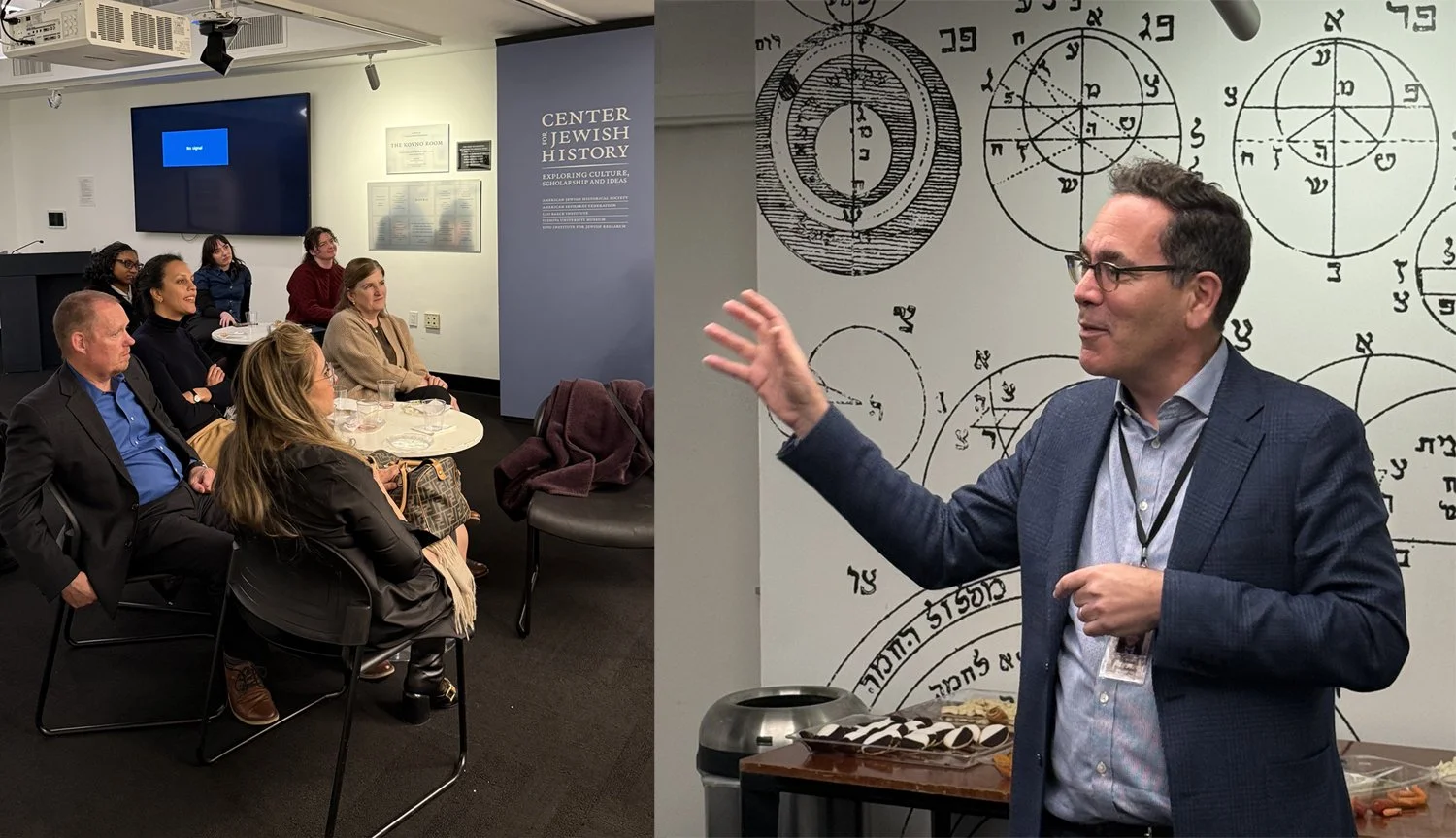
Members of the United Nations Association of New York City (UNA-NYC) gathered together on January 13 for a powerful evening at the Center for Jewish History and its Anne Frank the Exhibition, an experience that combined historical reflection, scholarly insight, and community connection.

The event featured a private viewing of the immersive exhibition, a lecture by Professor Gavriel Rosenfeld, and a reception with wine and hors d’oeuvres. Held in conjunction with the global observance of the UN’s International Holocaust Remembrance Day, the evening underscored the continuing relevance of Anne Frank’s story in an era marked by rising antisemitism and challenges to historical memory.
The exhibition, which opened on January 27, 2025 on International Holocaust Remembrance Day, and which has been given its final extension through February 1st of 2026, presents a full-scale recreation of the annex where Anne Frank and her family hid from Nazi persecution during World War II. This marked the first time such a comprehensive presentation has been staged outside Amsterdam, incorporating more than 100 original artifacts from the Anne Frank House collection.
In his lecture, Prof. Rosenfeld, President of the Center for Jewish History and a noted scholar of Holocaust memory and modern extremism, offered historical context for the exhibit and its broader implications. Rosenfeld, who holds a Ph.D. in history and has written extensively on Nazi Germany, memory studies, and the politics of historical narrative, emphasized the enduring importance of confronting hatred and preserving memory for future generations.
“Anne Frank’s diary serves as both a warning and a call to action,” Rosenfeld noted, highlighting how the exhibition challenges visitors to grapple with the past not as a distant tragedy but as a living reminder of the dangers of prejudice and discrimination.
The setting at the Center for Jewish History, with its contemplative galleries and archival depth, proved especially suited for dialogue and engagement. UNA-NYC members found the evening deeply moving and thought-provoking, due to the exhibition’s effective ability to convey Anne Frank’s life through the human scale of her surroundings and belongings, bringing history closer to personal understanding.