Who Will Lead the World Next? Women and the Future of UN Leadership
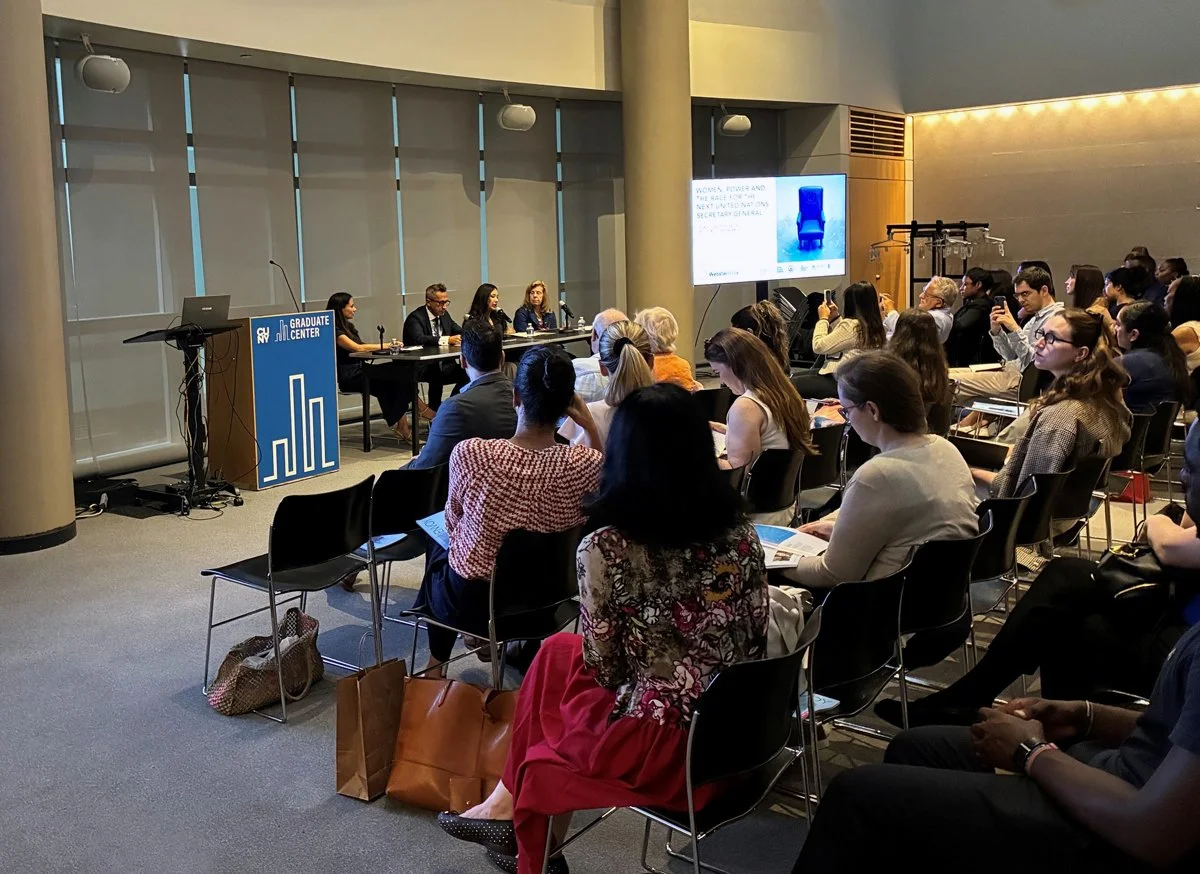
On September 8, the United Nations Association of New York (UNA-NYC), together with a distinguished group of co-conveners, brought together diplomats, scholars, civil society representatives, and members of the public for Women, Power and the Race for the Next United Nations Secretary-General. Hosted by the Ralph Bunche Institute for International Studies at the CUNY Graduate Center in midtown Manhattan, the event examined the ongoing process to select the next UN Secretary-General and the growing international movement to see a woman elected to the position for the first time.
The event was sponsored by Webster Bank and co-convened by the United Nations Association of New York, the Ralph Bunche Institute for International Studies, the Estonian Mission to the United Nations, the Campaign for a Woman Secretary-General, GWL Voices, and Envoy magazine. The discussion was inspired in part by Envoy's special issue, Who Will Lead the World Next?
Opening the evening, Dr. Eli Karetny, Deputy Director of the Ralph Bunche Institute, reflected on the Institute's longstanding commitment to the mission and work of the United Nations. He emphasized the importance of selecting a Secretary-General capable of building trust across regions and political divides at a time of profound international challenges. Dr. Karetny also underscored the importance of ensuring that women candidates are central to the selection process, noting the demonstrated contributions of women to diplomacy, peacebuilding, and human rights.
The panel discussion was moderated by Stéphanie Fillion, Editor-in-Chief of Envoy magazine, and featured H.E. Mr. Rein Tammsaar, Permanent Representative of Estonia to the United Nations; Dr. Jean Krasno, Chair of the Campaign for a Woman Secretary-General; and Jesselina Rana, lawyer and UN advisor with CIVICUS Alliance in New York.
Over the course of the conversation, the panelists examined the current state of the selection process for the UN's next leader, including the respective roles of the Security Council and General Assembly and continuing calls for greater transparency and inclusivity. The discussion also addressed structural challenges within the process, including the influence of the five permanent members of the Security Council, the absence of a formal nomination deadline, and the informal character of certain aspects of candidate selection.
A central theme throughout the evening was the historic underrepresentation of women in the highest levels of global leadership. Since the United Nations was founded in 1945, all nine Secretaries-General have been men. Panelists discussed not only the importance of addressing that record, but also the perspectives and experiences that women bring to diplomacy, international cooperation, peacebuilding, and public leadership.
The conversation also explored the qualifications and public profiles of prospective candidates, the realities of contemporary international politics, and the importance of sustained public engagement in the selection of the next Secretary-General. Participants emphasized that the choice of the UN's next leader will take place at a consequential moment for multilateralism, when the Organization faces complex challenges ranging from armed conflict and geopolitical divisions to climate change and sustainable development.
The evening concluded with a call for continued advocacy in support of a more transparent, inclusive, democratic, and effective process for selecting the next Secretary-General — and for broad public engagement in the future of United Nations leadership.
As the UN approaches this important transition, this evening’s occasion offered a timely forum for considering one of the central questions facing the international community: What kind of leadership does the world need now, and who will lead the United Nations into its next chapter?